Scientist advisor
Art and science
Artist’s bio
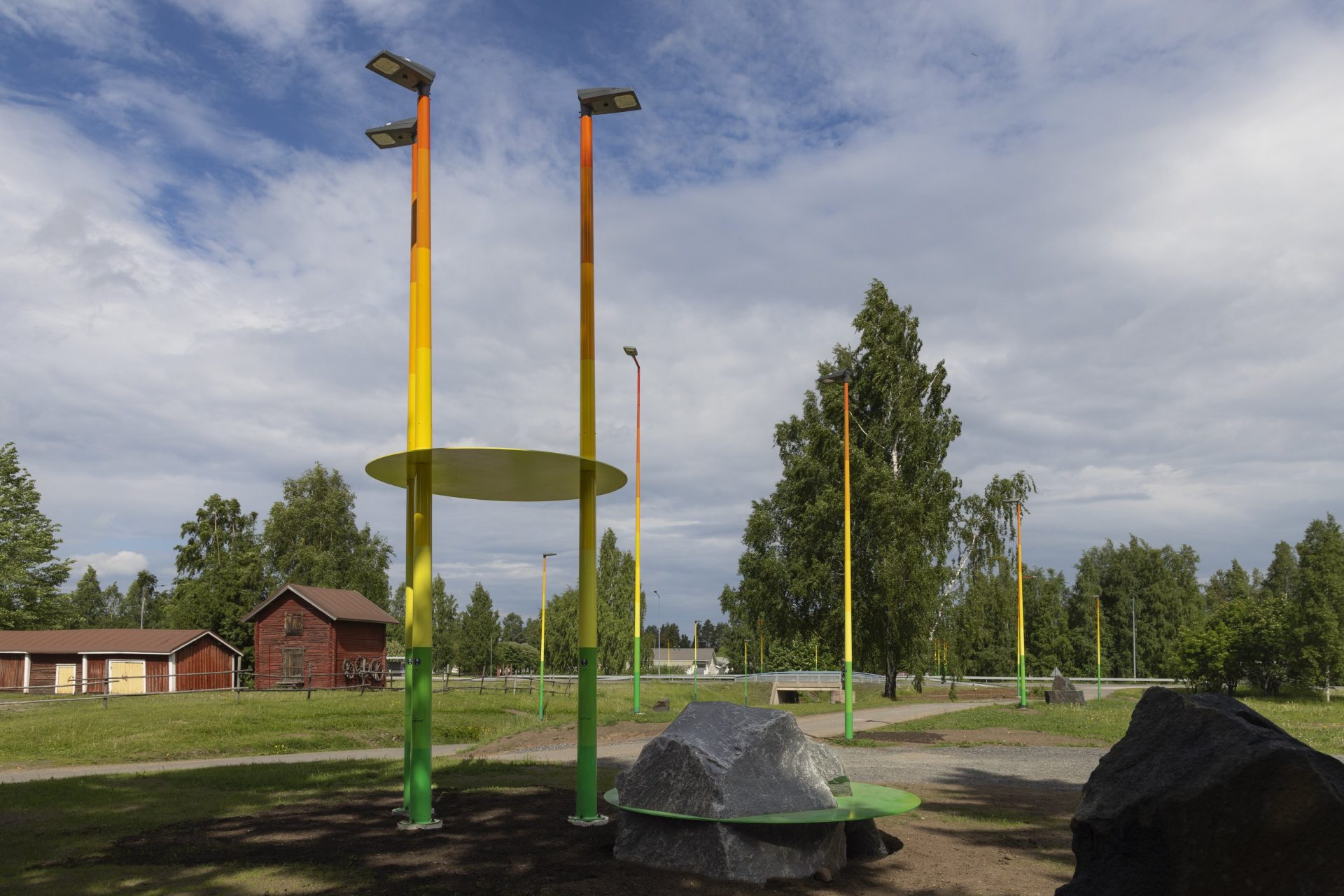
For Climate Clock, Gabriel Kuri transforms a familiar urban underpass and road side into a terrain of climate risk, with ordinary lampposts, benches and rocks added into the landscape to create new street furniture and painted in the exact green, orange and red hues of a risk assessment chart.
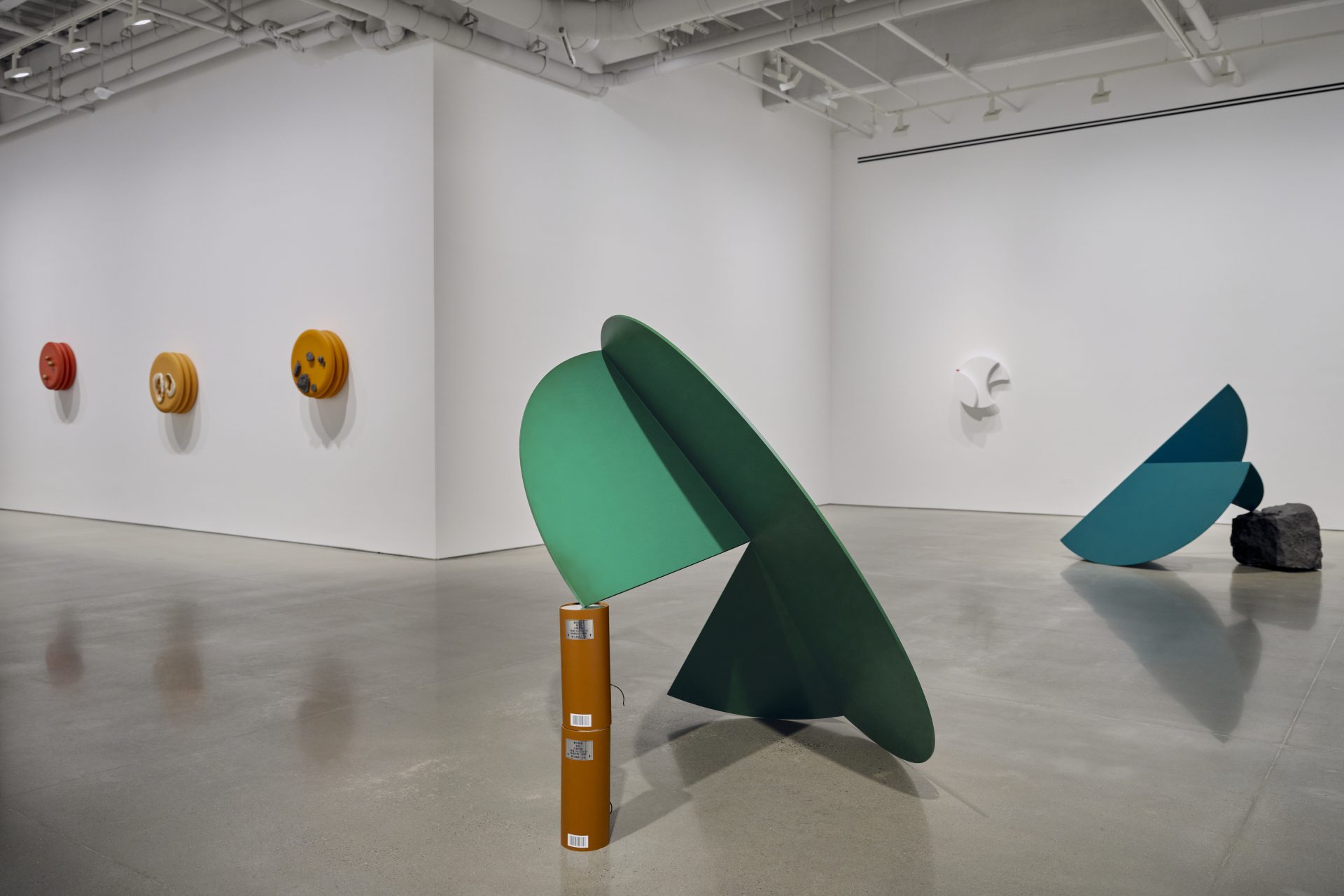
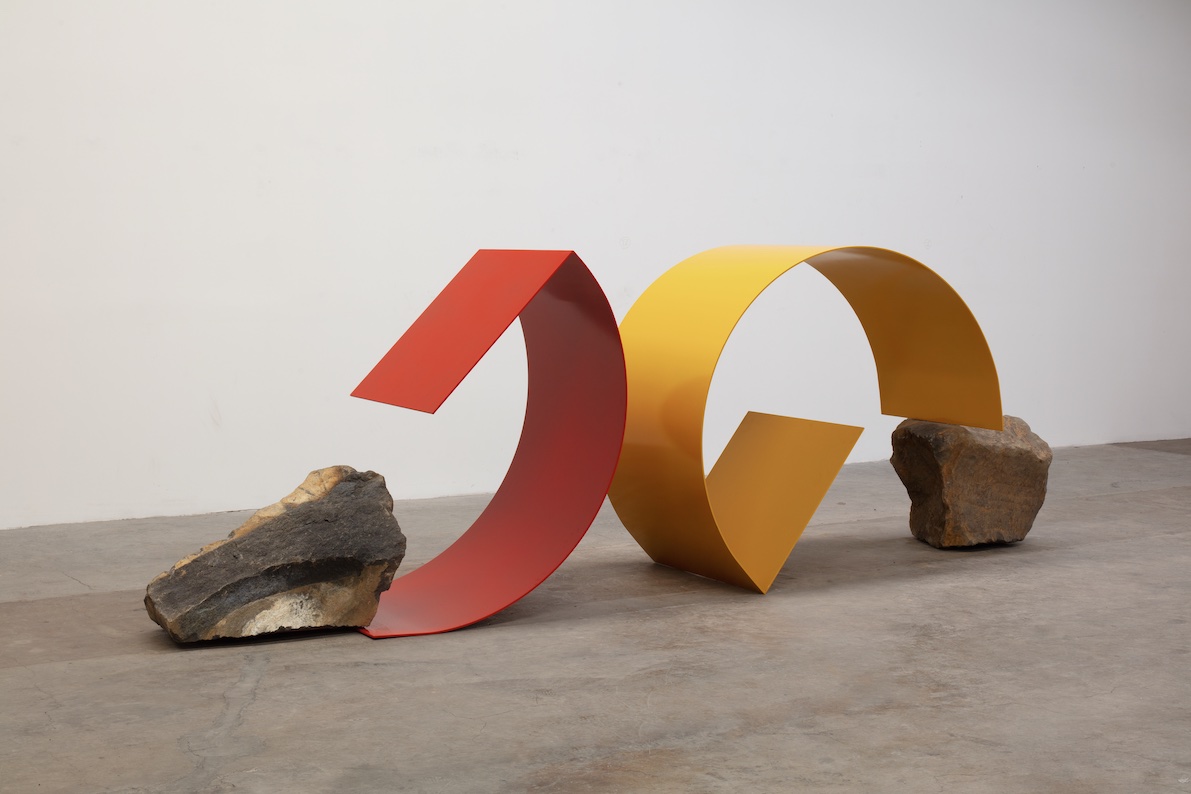
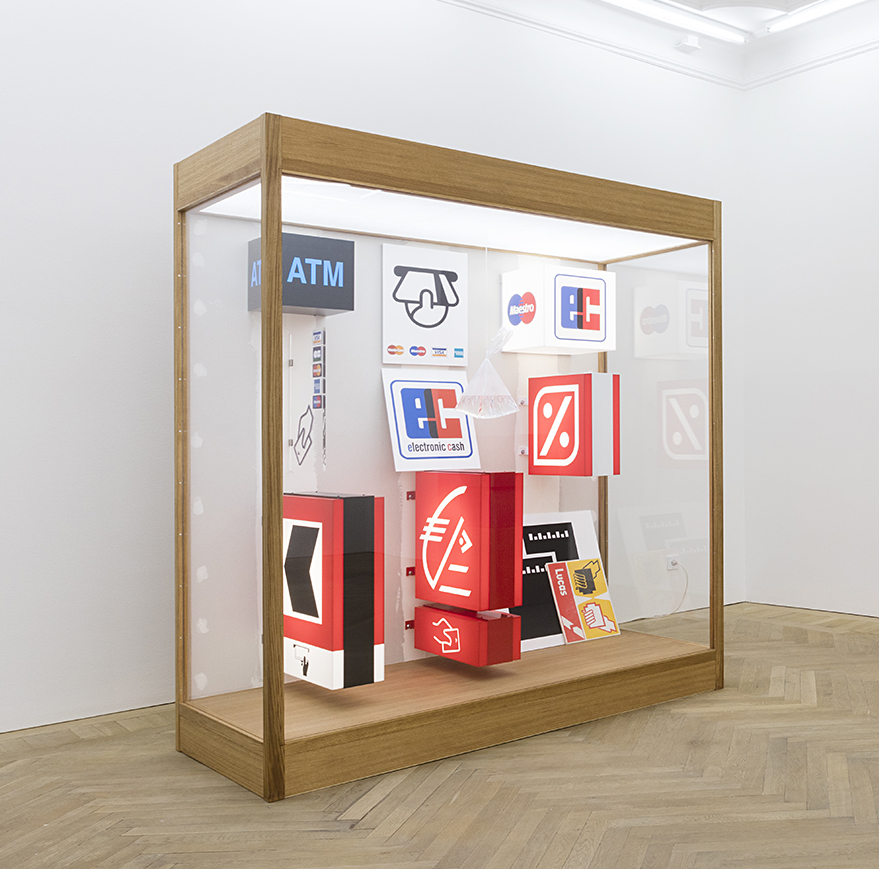
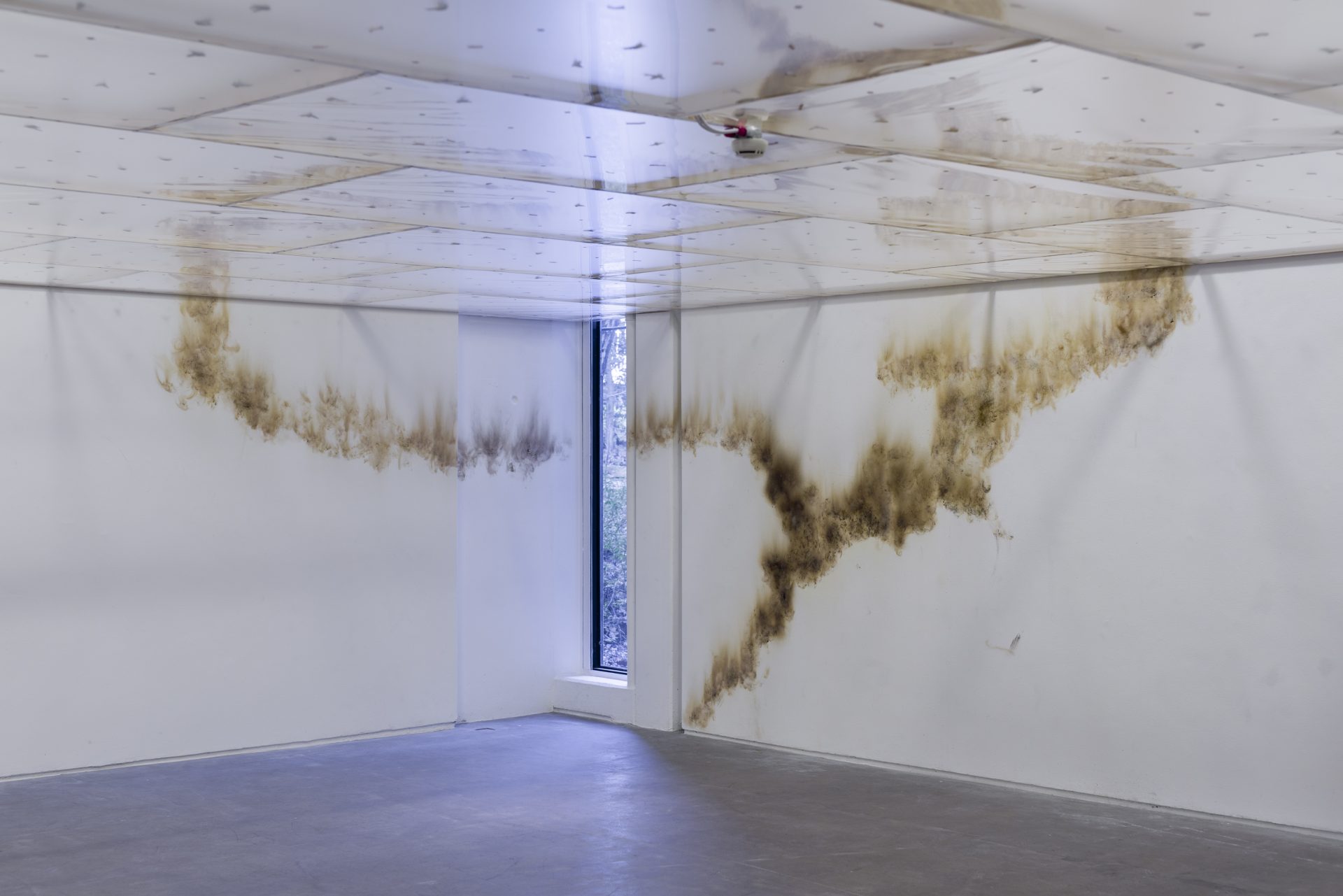
This artwork draws on Kuri’s interest in objects and spaces that explore human relationships to everyday things. He integrates elements of the familiar into his collages and sculptures. For example, waste products such as plastic bags, advertising flyers, receipts and tickets. The objects are brought together in unexpected ways such as socks set next to stones.
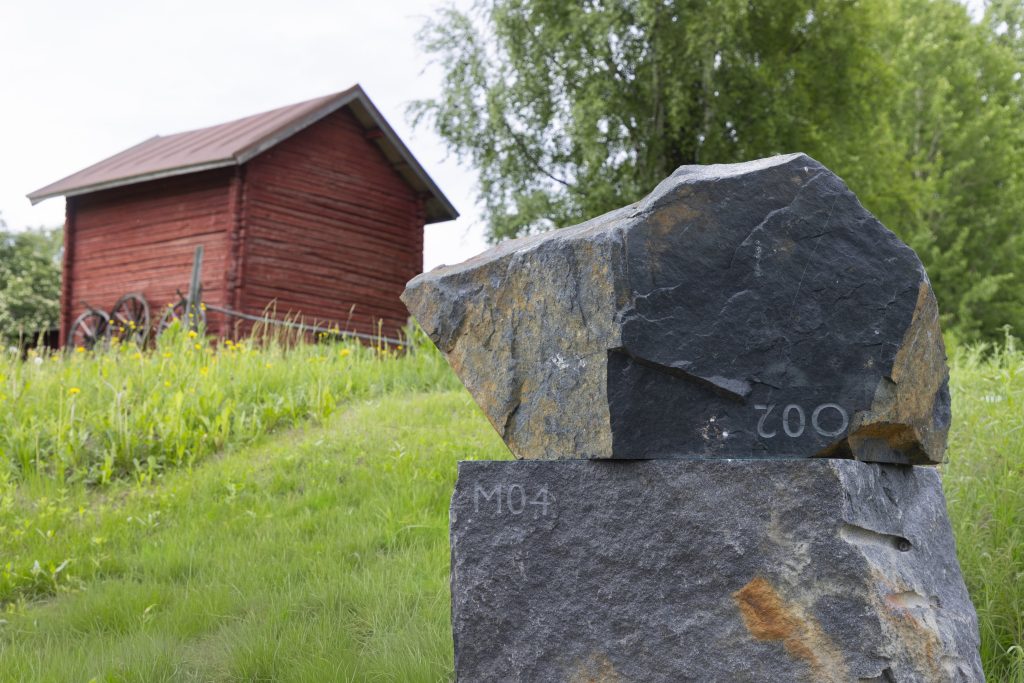
Photo: Maija Toivanen/Oulu2026.
The intervention in the urban landscape draws on elevations (heights of the ground) on the two opposing sides of a highway in Oulunsalo, connected by an underpass. Consisting of rows of functioning lamp posts, boulders horizontally halved and reconstituted, it draws its materials and shapes from existing street furniture. Lampposts and rocks are painted with a horizontal colour gradient corresponding to their precise height relating to green (low risk), yellow (low medium risk) , orange (higher medium risk) and red (high risk). The risk assessment chart is recognised everywhere and used across the world; with so-called cold colours at the bottom representing low risk, rising towards the high risk hot tones. It is used in any human activity involving forecasting the future: demography, weather forecasting, credit, insurance and other social activities.
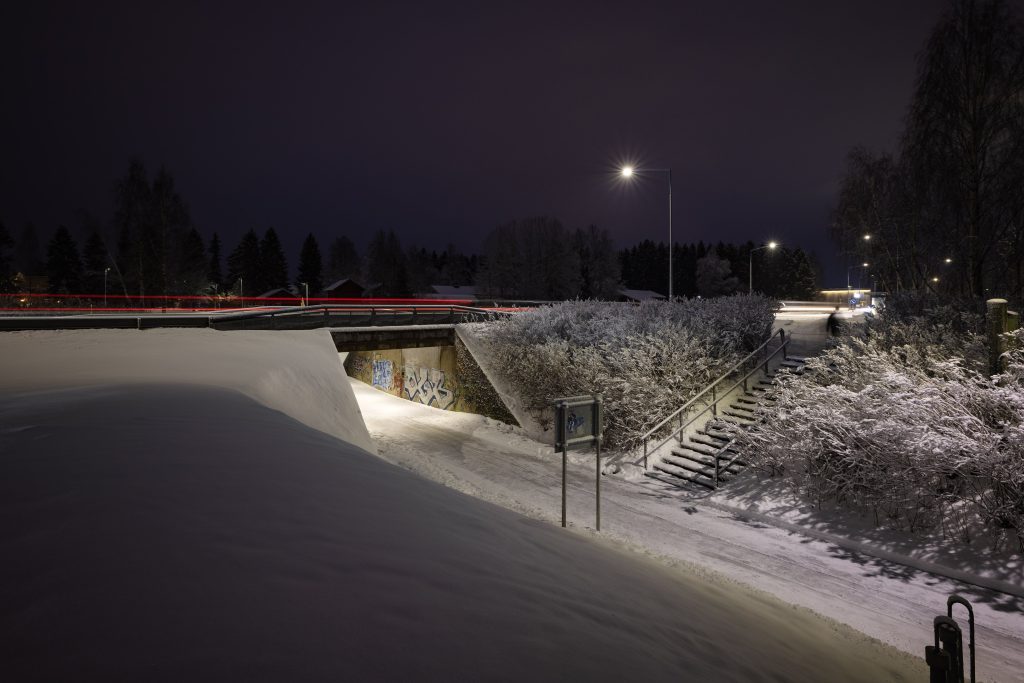
Suburban area in Oulunsalo. Photo: Harri Tarvainen.
Scattered around the terrain, colour coded lamp posts work as measuring sticks against which any and all other elements on view can be compared or provide shelters. Punctuating the site, we find large boulders that have been sliced horizontally in two halves and numbered respectively. Top and bottom halves of these boulders are interchanged with those on the opposing side of the road, exploring order and disorder, human expectations of things being in their place.
Scientist advisor
Climate scientist Professor Kevin Anderson, Manchester University.
Kevin is professor of energy and climate change at the Universities of Manchester (UK), Uppsala (Sweden) and Bergen (Norway). Formerly director of the Tyndall Centre for Climate Change Research, he engages widely with governments, gives international climate talks and is an active researcher with publications about Climate Policy, Nature and Science. Kevin has a decade of industrial experience in the petrochemical industry, is a chartered engineer and fellow of the Institution of Mechanical Engineers.
Art and science
Gabriel Kuri’s work reflects on shifting levels of risk brought about by climate change. In discussions with Kevin Anderson he explored how much risk we are prepared to consider with climate change and the fact that humans are adverse to considering extreme risk. The climate models created through scientific research often don’t contain the more dangerous versions of events and outcomes caused by greater warming. The scientists are concerned that people don’t want to hear this possibility. It is too overwhelming and unpalatable for them and so may stop them from wanting to challenge climate change.
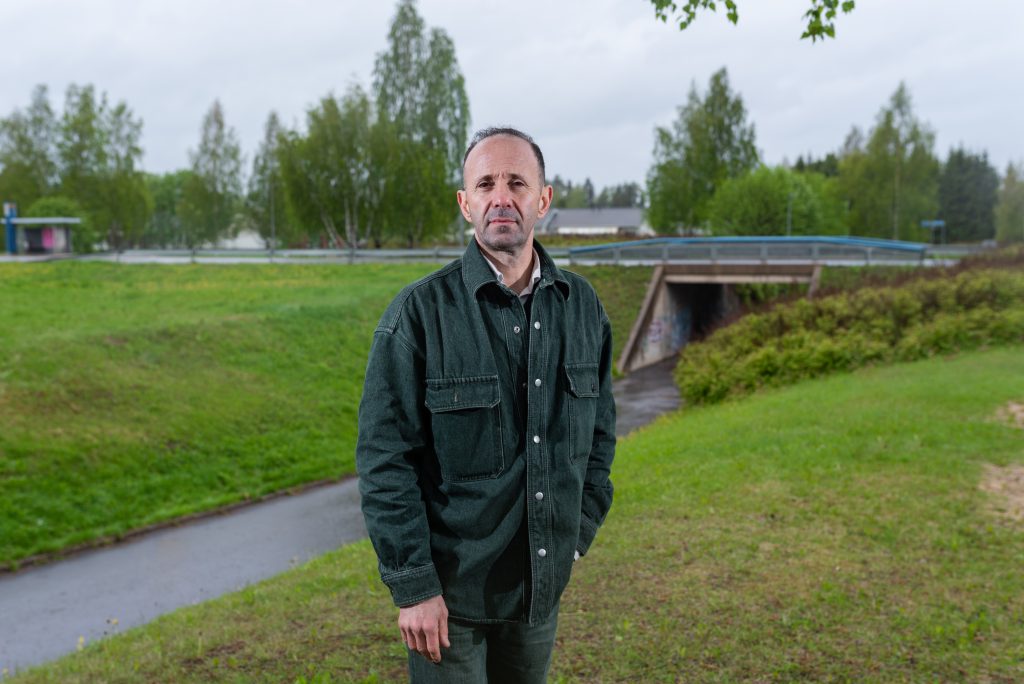
Gabriel Kuri. Photo: Kevin Kallombo.
Gabriel Kuri (b. 1970, Mexico) lives in Brussels.
Kuri completed a ENAP UNAM Mexico (BFA) and Goldsmiths’ College London (MFA) and was with Gabriel Orozco’s studio 1987-1995. Solo exhibitions: Kurimanzutto, New York (2026) Museo JUMEX CDMX, Aranya Art Center China (2023), Douglas Hyde Gallery Dublin, WIELS Brussels (2020), Aspen Art Museum (2015), Bergen Kunsthall Norway (2012), South London Gallery, ICA Boston (2011). Selected group exhibitions: Chosen Memories MoMA NYC (2023), Sculpturegarden Geneve (2022), Venice Biennale 2003, 2011.Public collections include MoMA New York, Tate Gallery London and Centre Pompidou Paris.