Science advisor
Development and Production
Art and science
Artist’s bio
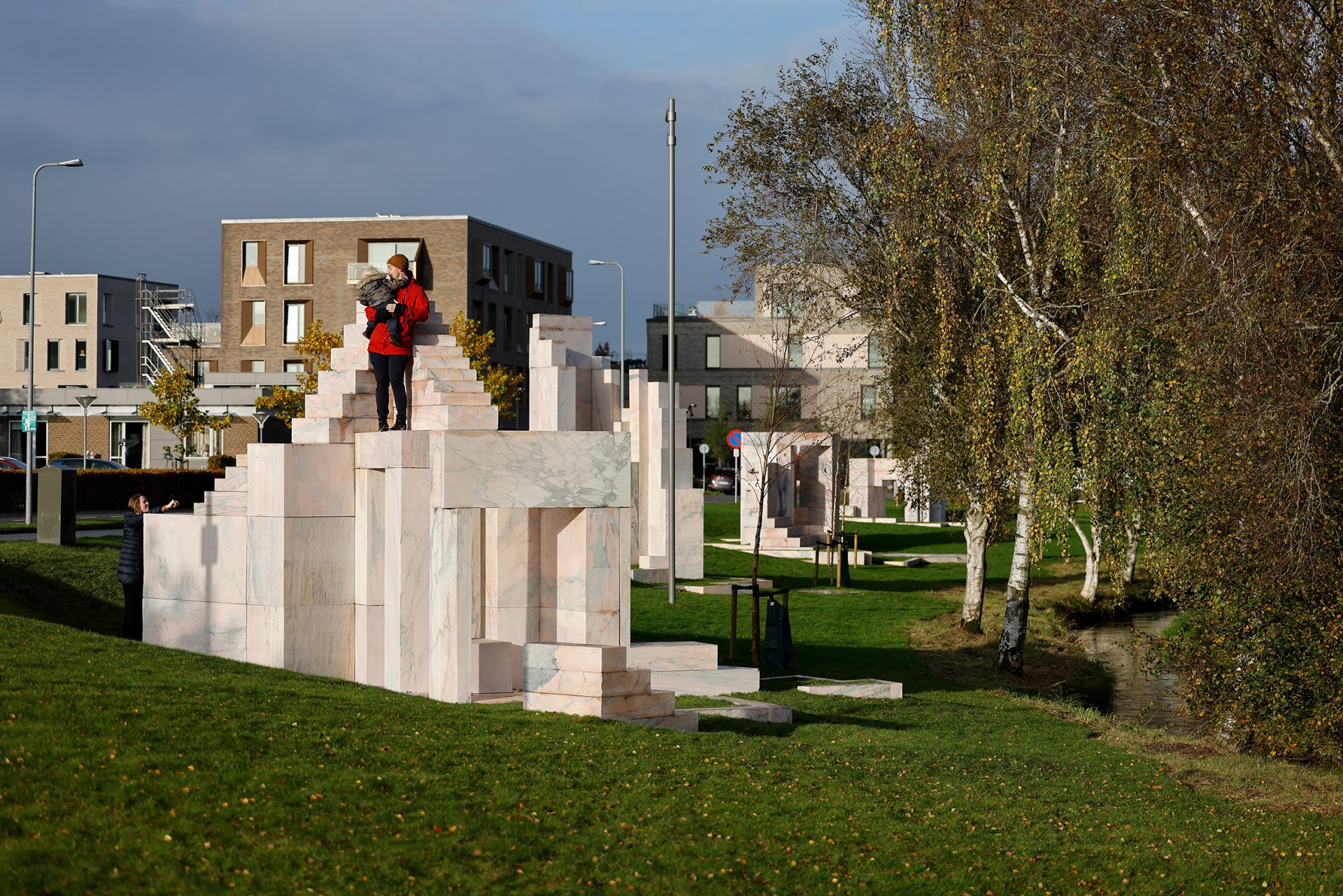
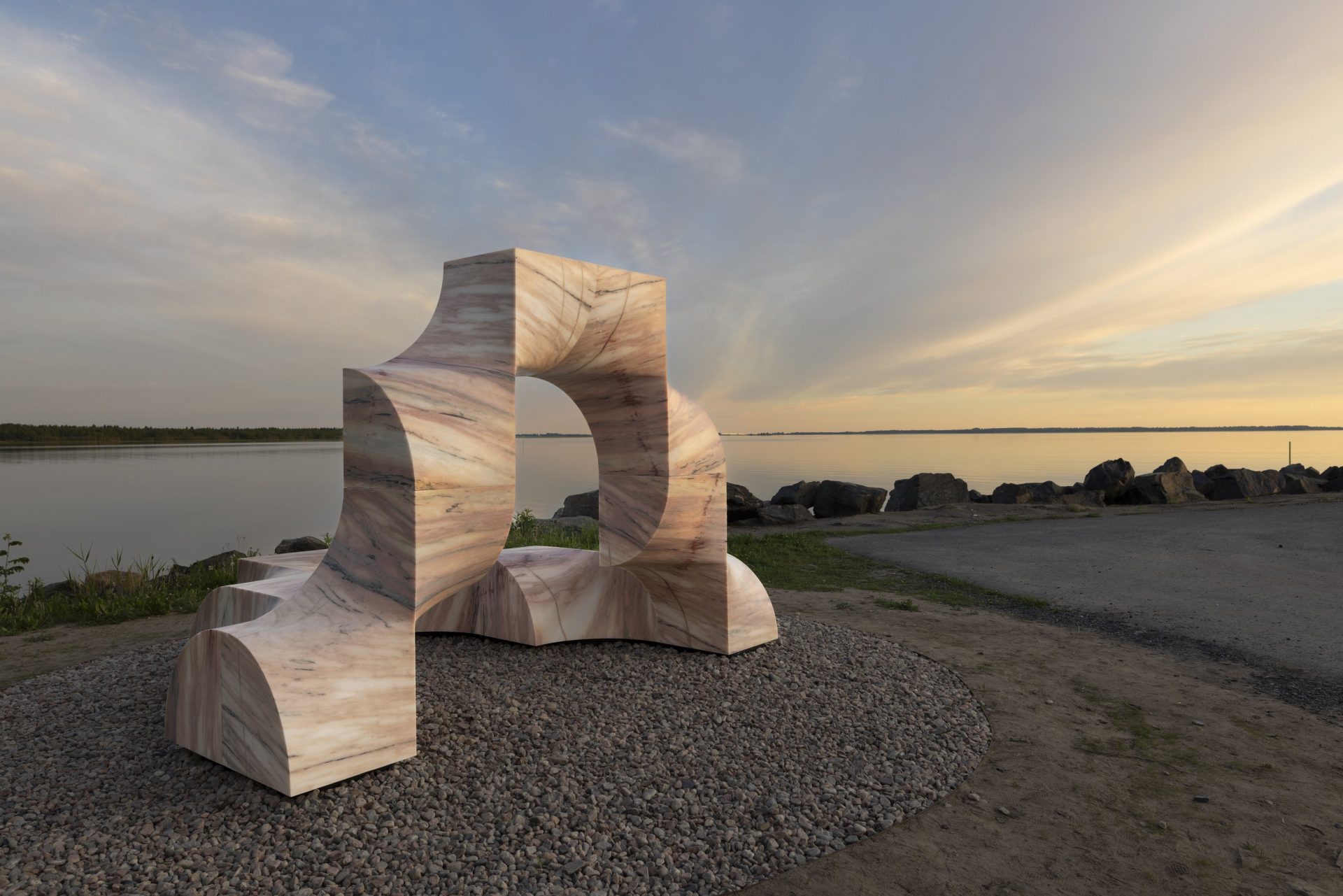
Super Kello provides the residents of Kello, a harbour in Haukipudas, with a place to sit, rest, and consider other ways to measure time. This bell-shaped stone sculpture faces out to sea like a light house, connecting the marine world to land; building a bridge between the underwater ecosystem of the fish and aquatic life and human habitation in nearby human dwellings. It welcomes fishing boats, sailing boats and leisure craft into the safety of the harbour.
In dialogue with the theme of Climate Clock the artist group has worked with Peter Chilvers as the Software Architect to create a ‘slow’ sound element. It also suggests that there are other temporalities beyond the fast pace of contemporary production. At this place (the harbour) of leaving and returning, Kello’s pink marble emits sound and broadcasts Pentti Saarikoski’s Finnish translation of Homer’s ‘The Odyssey’, read by a Kello fisherwoman, Elina Halonen. Each word of the story can be heard, very slowly, one word per hour over the course of ten years, making the time of the story literal. In this way, it allows visitors to experience time at a slower pace. And reflects the duration of Odysseus’ journey home.
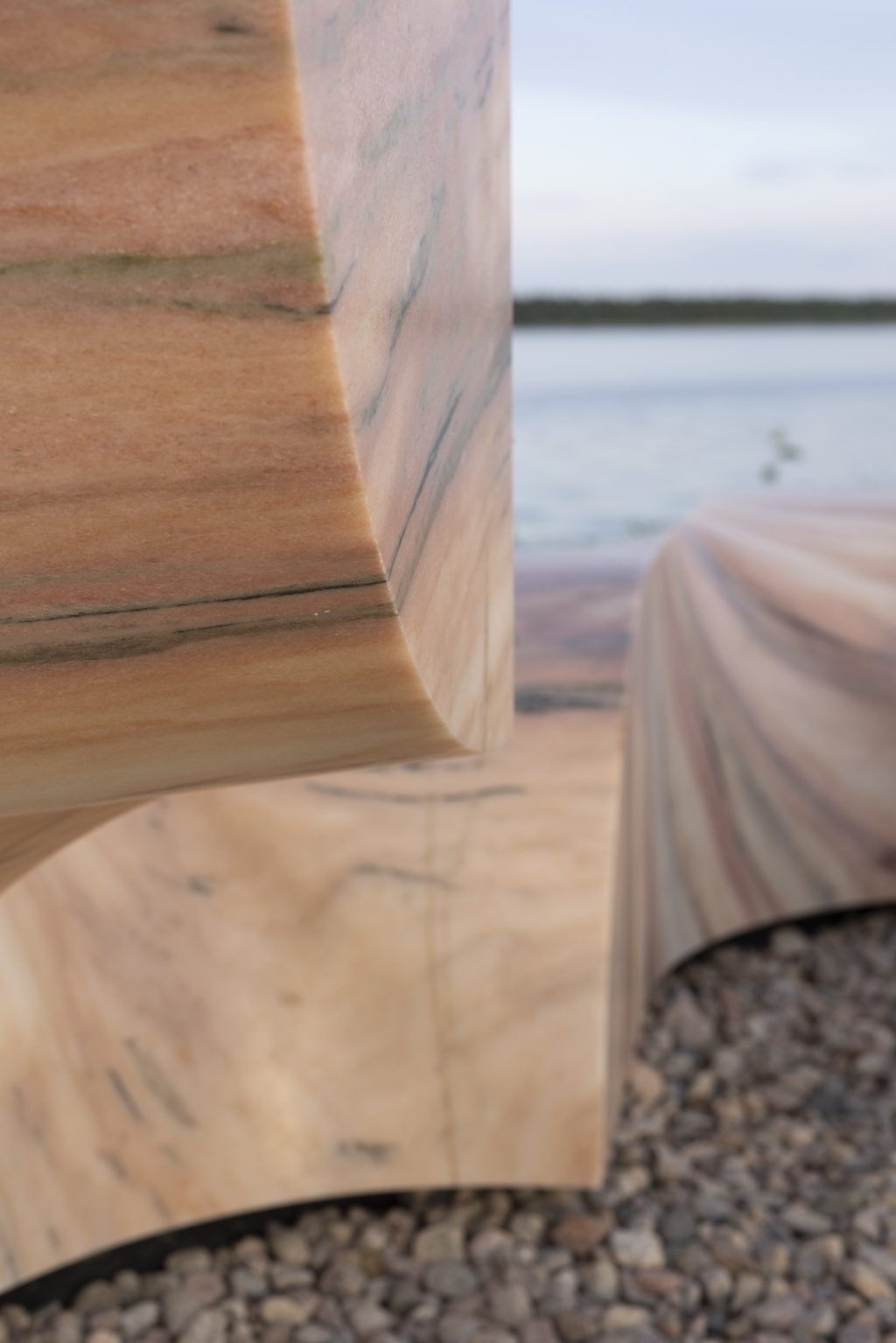
Photo: Maija Toivanen/Oulu2026.
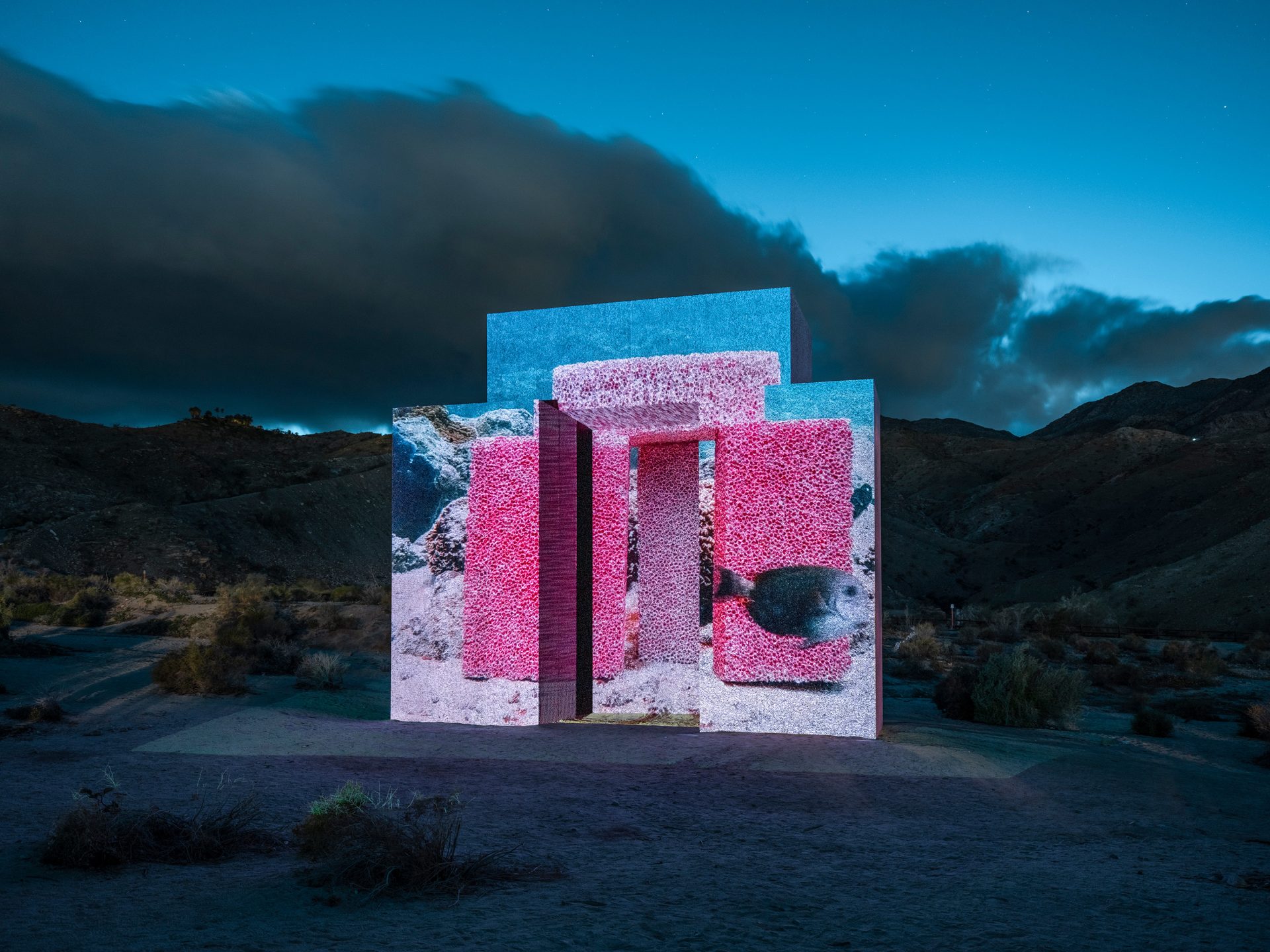
Like the Odyssey, the Kello harbour’s story is one of going away and coming back, an interface between ocean and dry land. SUPERFLEX and KWY.studio have developed a modular building block, the ‘Fish Cube’, which maximises the surface area of a cube and provides habitable areas for marine life when sea levels rise. Fish are often affected adversely by dredging or removing stones from harbours which they need to nest and hide. These modules have been used to build Super Kello, creating sculptural infrastructure that functions as art for humans and potential shelter for fish.
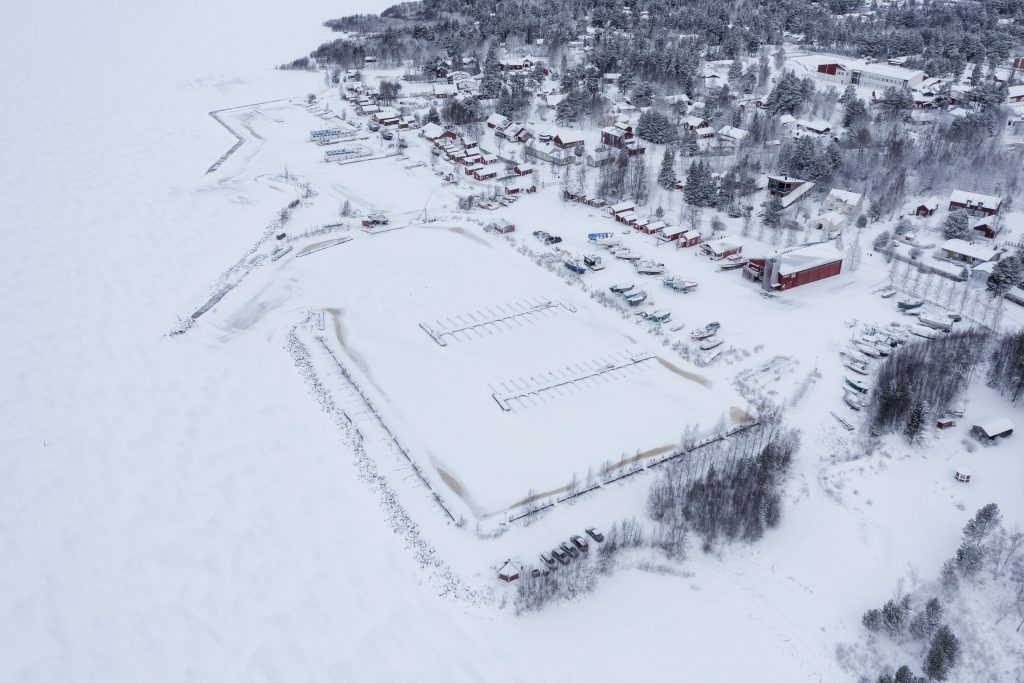
Aerial view of the fishing village of Kellon Kiviniemi in Haukipudas. Photo: Harri Tarvainen.
Science advisor
Behavioural Ecologist Dr. Alex Jordan, Max Planck Institute of Animal Behaviour, Konstanz, Germany.
Alex Jordan is a behavioural ecologist studying the evolution of animal social behaviour in natural ecological and social contexts and he is especially devoted to fish. Jordan looks at why animals do what they do. He uses computational techniques developed in lab settings like Drosophila and Zebrafish, including machine vision, automated tracking, and behavioural decomposition. This is to understand how animals perceive and process social cues, and how environments, both social and physical, are changed as a consequence of animal behaviour.
Development and Production
KWY.studio, Lisbon, Portugal.
KWY.studio is an architecture practice based in Lisbon. Their collaborative design process is grounded in dialogue and shaped by an interest in history, geometry, and the craft of making. KWY.studio has worked in close collaboration on various SUPERFLEX’s large-scale projects.
Art and science
SUPERFLEX have been exploring time and climate change with scientists for many years. Time is deeply connected to the scientific understanding of climate change. SUPERFLEX’s idea of slowing time (by which the scientists mean to slow down the rate of change) connects to the human desire to do so, so that we don’t face disastrous consequences soon. The amount of degrees of warming of Climate Change itself is calculated by measuring temperature changes over time and the scientific way we do this the world over is by looking at changes in sea level temperature. Vast networks of satellites sending infrared beams and checked by ‘ground truths’ instruments on floating buoys and cruise liners across the globe. These measurements quantify whether our seas and therefore different parts of the earth are warming or cooling. In fact they measure the way we are forcing nature through our influence rather than the time that nature would like to take.
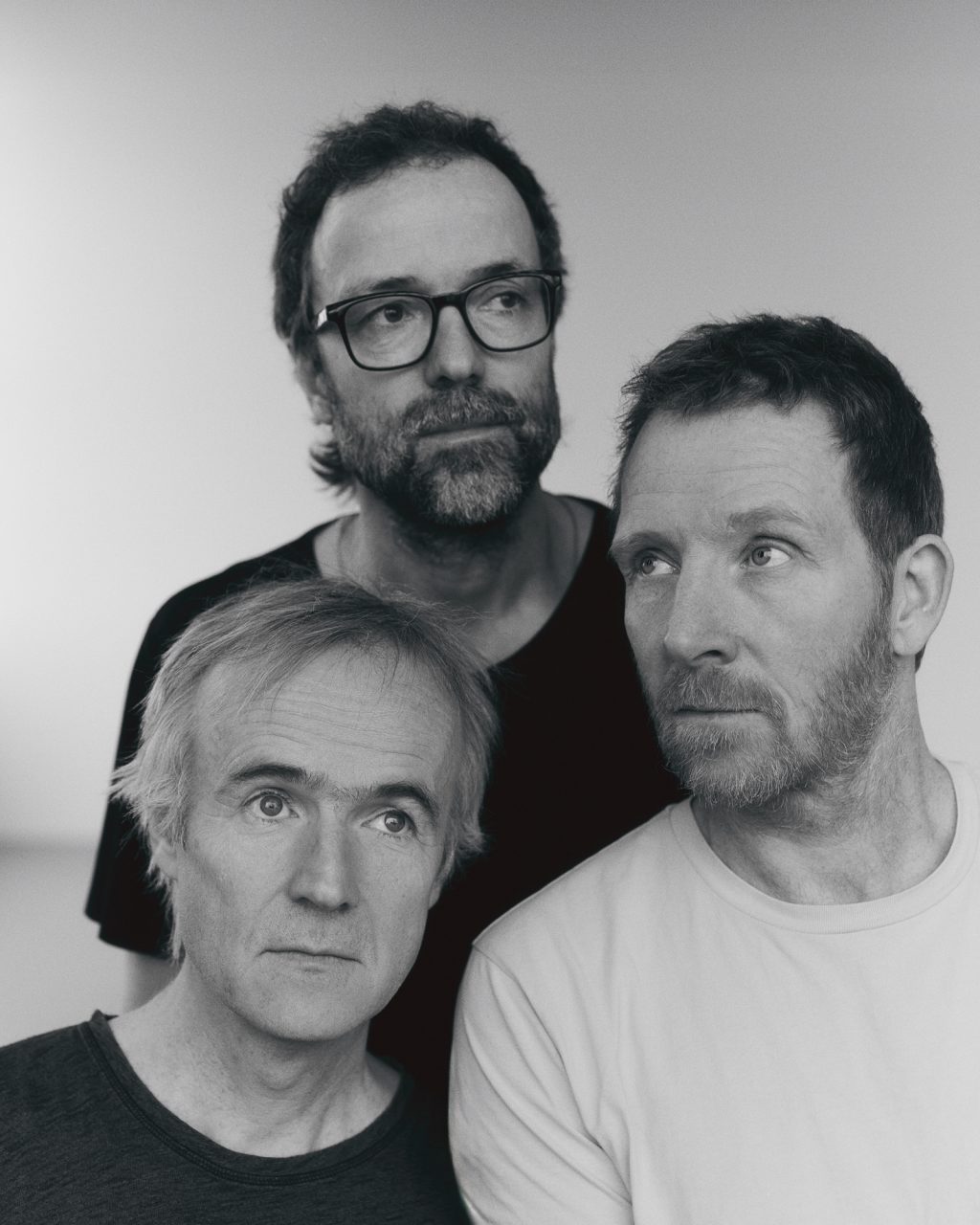
Superflex, photo: Daniel Stjerne.
SUPERFLEX are a group founded in 1993 by Jakob Fenger, Bjørnstjerne Christiansen, and Rasmus Rosengren Nielsen and based in Copenhagen.
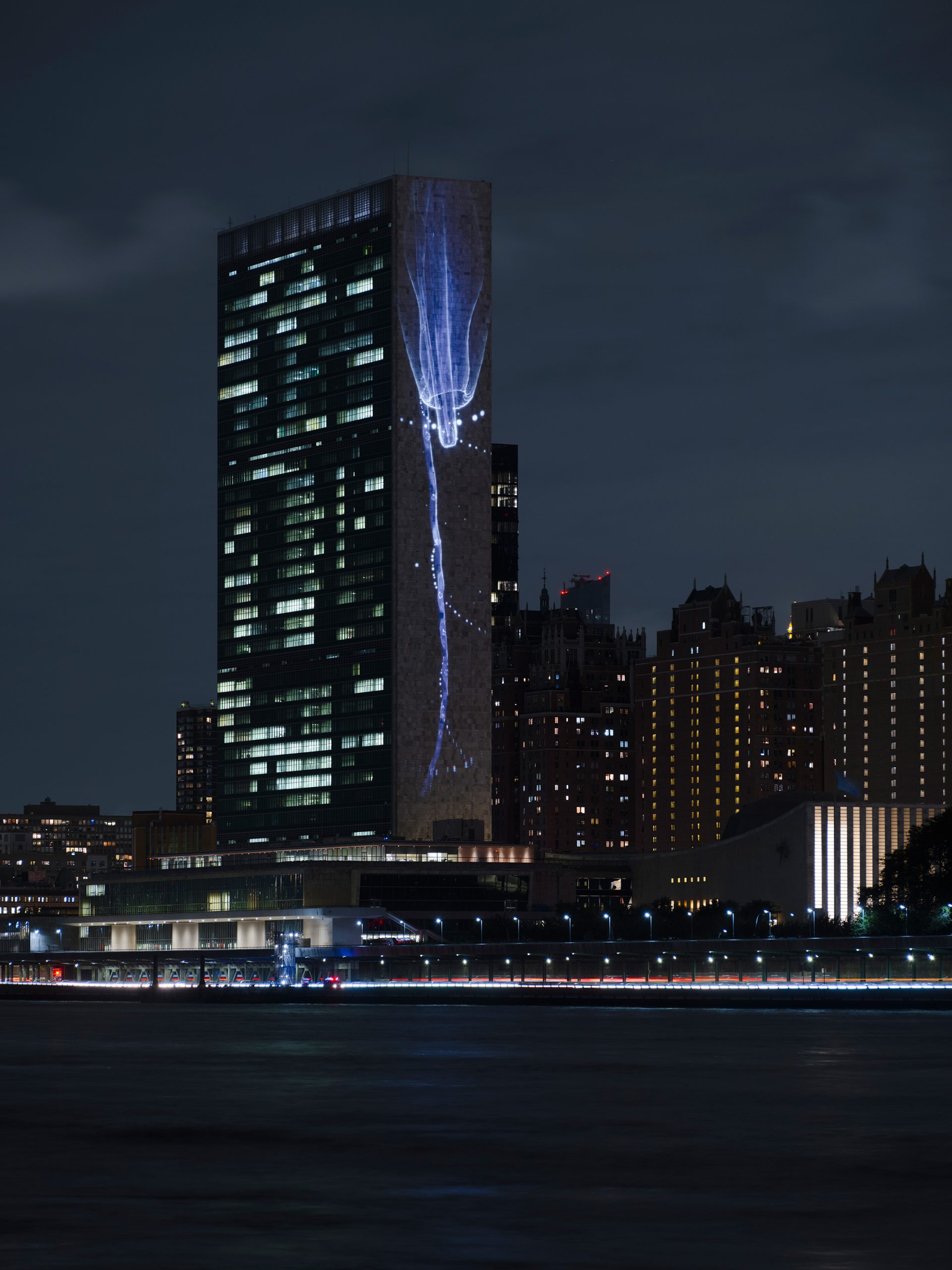
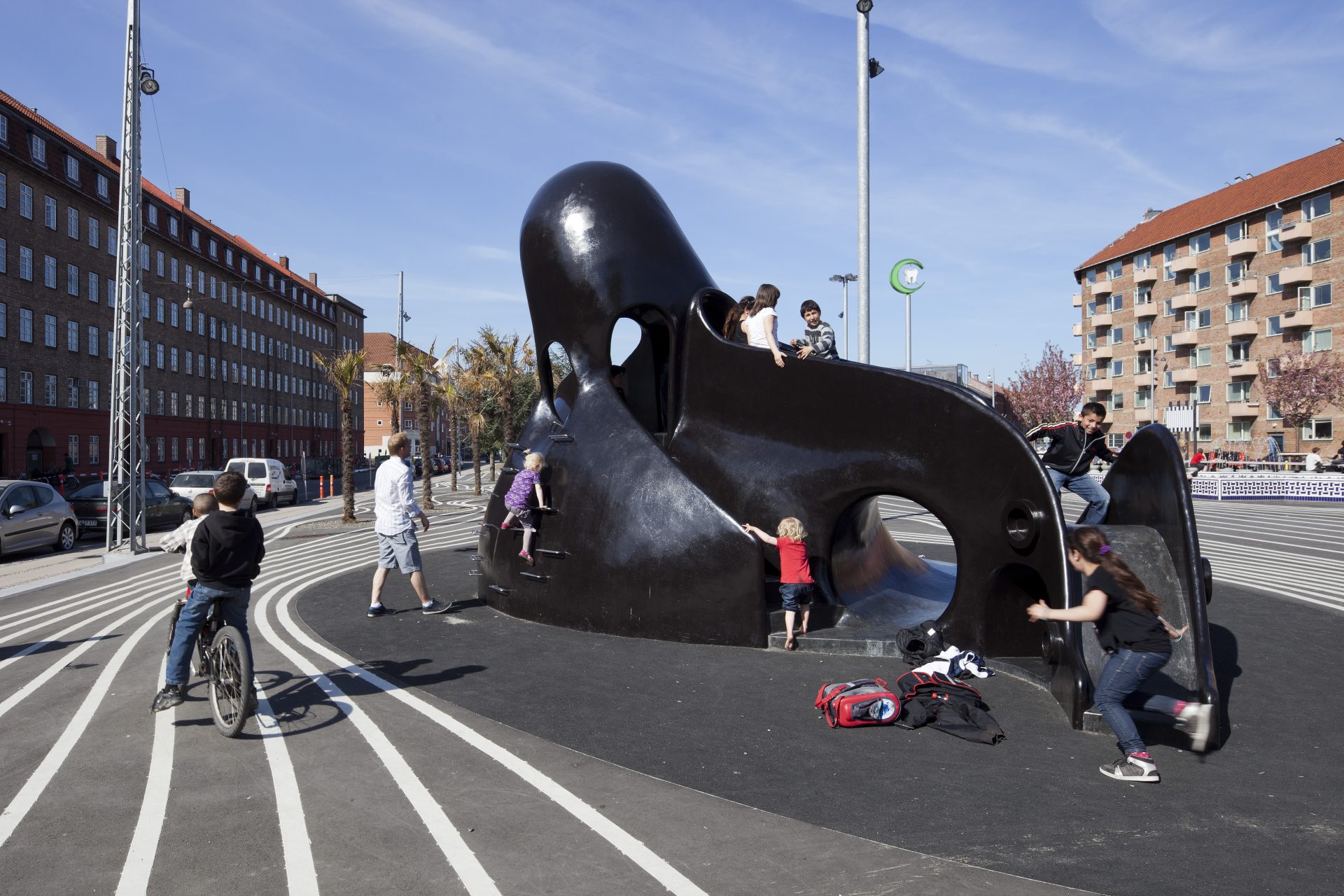
Public art commissions include the award-winning park Superkilen Copenhagen (2012) to “Interspecies Assembly” UN Headquarters, New York (2021). Exhibitions include “One, Two, Three, Swing!” Hyundai Commission (2017), Tate Modern’s Turbine Hall, London; the Institute of Contemporary Art, San Diego; Fundación JUMEX, Mexico City; 21st Century Museum of Contemporary Art, Kanazawa; Thyssen-Bornemisza Contemporary, Vienna. SUPERFLEX’s work has featured in several iterations of the Venice Biennial as well as the Liverpool Biennial, Sharjah Biennial, Shanghai Biennial and Moscow Biennial. Their work is part of public collections such as the Museum of Modern Art, New York; Louisiana Museum of Modern Art, Humlebæk; Jumex Collection, Mexico City; Kunsthaus Zürich; Hirshhorn Museum and Sculpture Garden, Washington D.C; and the National Museum of Art, Copenhagen.